THE SHORT ANSWER
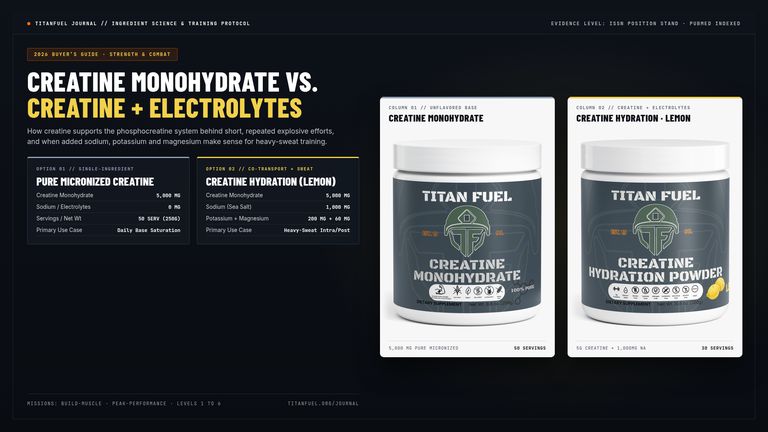
Mix each 5 g scoop with at least 8 oz of water, then drink to your normal daily needs and replace what you sweat out. Creatine does not need a special water target, and research has not found that it dehydrates athletes or hurts heat tolerance at recommended doses. The real variable is your sweat: long, hot sessions call for more fluid and some sodium.
KEY TAKEAWAYS
- Mix each scoop with 6 to 8 oz of water or more, per the label.
- Creatine pulls water into muscle; it does not dry you out.
- Weigh yourself before and after training to find your real fluid needs.
- On long, sweaty days, sodium matters as much as water.
How much water per scoop
Start with the label. Our Creatine Monohydrate says to mix one scoop in 8 oz of water or juice. Our Creatine Hydration Powder (Lemon) says 6 to 8 oz for its 10 g scoop. That is enough to dissolve the powder and get it down. If grit at the bottom of the glass bugs you, use a little more water and stir again before the last sip.
There is no need to chug a liter with every scoop. Creatine is drawn into muscle cells along with water over days and weeks, so what matters is your total intake across the day, not one big glass at dose time.
Does creatine dehydrate you?
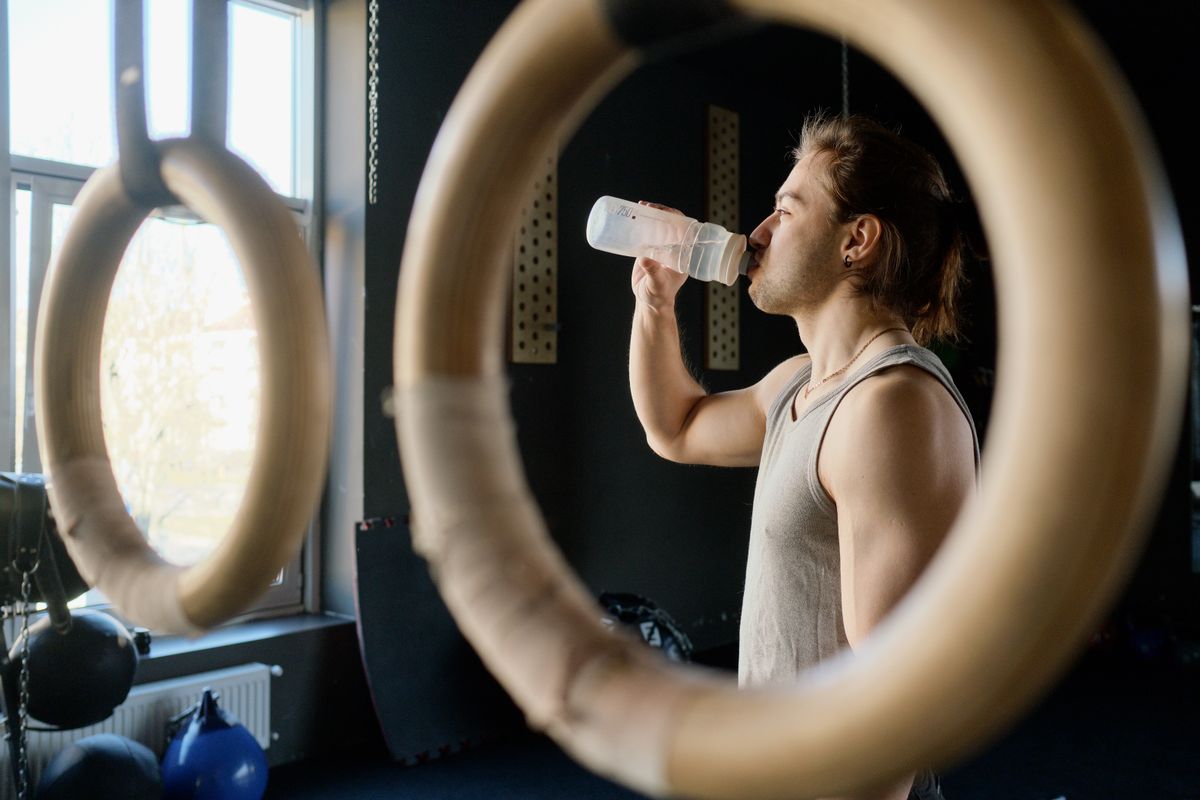
This one keeps coming back, especially in locker rooms and on deployment. A 2009 systematic review in the Journal of Athletic Training looked at controlled trials of athletes exercising in the heat. It found no evidence that creatine hinders the body's ability to get rid of heat or harms fluid balance at recommended doses. The 2021 ISSN review of common creatine questions also addresses dehydration and cramping and does not support the claim.
What creatine does do is store extra water inside muscle, usually about 2 to 4 lb (1 to 2 kg) in the first weeks, mostly after a loading phase. That water is inside your muscle cells, not missing from the rest of your body.
Finding your daily target
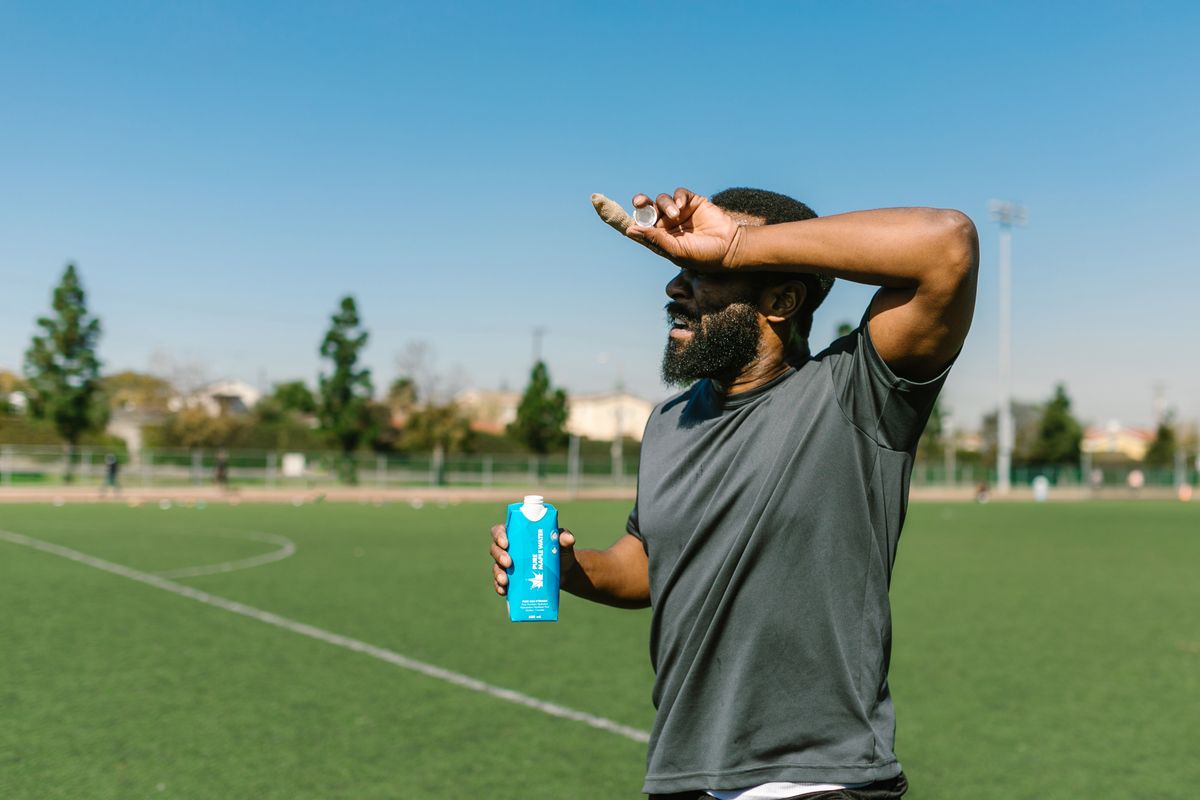
Forget one-size rules like a gallon a day. A 140 lb lifter in an air-conditioned gym and a 200 lb infantry soldier on a summer ruck need very different amounts. Two simple checks work better than any formula. First, your urine should be pale yellow most of the day. Second, weigh yourself before and after a typical session, in minimal clothing, after toweling off.
Every pound you lose during training is roughly a pint (16 oz, about 0.45 L) of sweat that was not replaced. Common sports nutrition guidance is to drink about 20 to 24 oz for each pound lost (1.25 to 1.5 L per kg) over the next few hours, because you keep losing some fluid as urine while you rehydrate. The calculator below does the math for you.
INTERACTIVE
Sweat rate calculator
Weigh in before and after a 1 hour session, add what you drank.
Body weight lost: 0.9%, under the 2% mark. Nice.
A practical drinking target: about 22 to 35 oz per hour, in small sips.
16 oz of sweat is about 1 lb of body weight. Urine during the session is ignored for simplicity.
Here is what that can look like on a real ruck day for a 180 lb (82 kg) soldier. Breakfast at 0500 with 16 oz of water and the daily creatine scoop. Another 16 oz in the hour before stepping off. During a three-hour, 12-mile ruck in mild weather, small sips every 15 to 20 minutes, which often adds up to 20 to 30 oz an hour depending on heat and pace. Afterward, a weigh-in shows 3 lb lost, so the plan is roughly 60 to 72 oz over the next few hours, with a salty meal. None of that is a creatine rule. It is just what that day demanded.
Heat, rucks and two-a-days
Long, hot sessions are where water alone falls short. Sweat carries sodium, and replacing big losses with plain water can leave you feeling flat. This is the job our Creatine Hydration Powder was built for: one scoop gives you the same 5,000 mg of creatine as plain monohydrate, plus 1,000 mg of sodium from sea salt, 200 mg of potassium and 60 mg of magnesium.
Use it on the days you would reach for an electrolyte drink anyway: a 12-mile ruck, a summer field exercise, a double session in a hot gym, or the second practice of a two-a-day. On a short, cool lifting day, plain monohydrate and water are enough. Never take the electrolyte version four times a day to load; that would add up to 4,000 mg of sodium.

Weight cuts and weigh-ins
Fighters and wrestlers ask whether they should stop creatine or stop drinking before a weigh-in. Cutting water is a decision for you and your coach, and aggressive dehydration carries real risks. What we can say is that creatine itself is not dehydrating you. The extra 2 to 4 lb of muscle water is the factor to plan for. Many weight-class athletes skip loading, take a steady 3 to 5 g a day and start well before camp, so the scale is stable before the cut begins.
Hydration check while taking creatine
0/5If you are building toward Build Endurance or training at Level 4 and above, test your sweat rate in both cool and hot conditions. The numbers can double between seasons.
FAQ
How much water should I drink with 5 g of creatine?
Mix it with at least 6 to 8 oz of water, per the label. Beyond that, drink to your normal daily needs and replace sweat losses.
Do I need to drink more water on creatine?
There is no special creatine water target. Creatine stores some extra water in muscle, so make sure you keep up with thirst, pale urine and your sweat losses.
Does creatine cause dehydration or cramps?
A 2009 systematic review found no evidence that creatine harms fluid balance or heat tolerance at recommended doses, and the 2021 ISSN review does not support the cramping claim.
Can I mix creatine into an electrolyte drink?
Yes. Or use Creatine Hydration Powder, which already combines 5 g of creatine with 1,000 mg of sodium, 200 mg of potassium and 60 mg of magnesium.
How much water weight does creatine add?
Usually about 2 to 4 lb (1 to 2 kg) in the first weeks, mostly after a loading phase. It is water stored inside muscle.
IF YOU WANT A HAND
Fuel that fits this plan
Food and habits come first. If a supplement makes your routine easier, these are the ones that match this article.
SOURCES
- Lopez RM et al. Does creatine supplementation hinder exercise heat tolerance or hydration status? (2009)
- Antonio J et al. Common questions and misconceptions about creatine supplementation (2021)
- Kreider RB et al. ISSN position stand: safety and efficacy of creatine supplementation in exercise, sport, and medicine (2017)
This article is for general education and is not medical advice. Talk to your doctor before starting a supplement, especially if you have a health condition, take medication, are pregnant or are under 18. Results vary from person to person.