THE SHORT ANSWER
You get stronger by repeating good weeks, not by surviving one brutal one. Build your week around two or three anchor lifts, alternate hard and easy days, change only one variable at a time, and take a lighter week every four to eight weeks before your body forces one on you.
KEY TAKEAWAYS
- Pick 2 or 3 anchor lifts and keep them for at least 6 weeks so you can actually see progress.
- Contrast beats volume: a hard day should be followed by an easier one.
- Progress one dial at a time (load, reps or sets), never all three.
- Schedule a deload before you need it, not after you get hurt or stall.
Why the week matters more than the workout
One heroic session feels great. Then you are sore for four days, skip two workouts and start over. Strength does not care how hard Tuesday was. It cares how many decent Tuesdays you string together.
So think in weeks. A good week has enough hard work to push adaptation and enough space for sleep, sport and the rest of your life. If your plan only works when nothing goes wrong, it is not a plan. It is a wish.
Step 1: choose two or three anchors
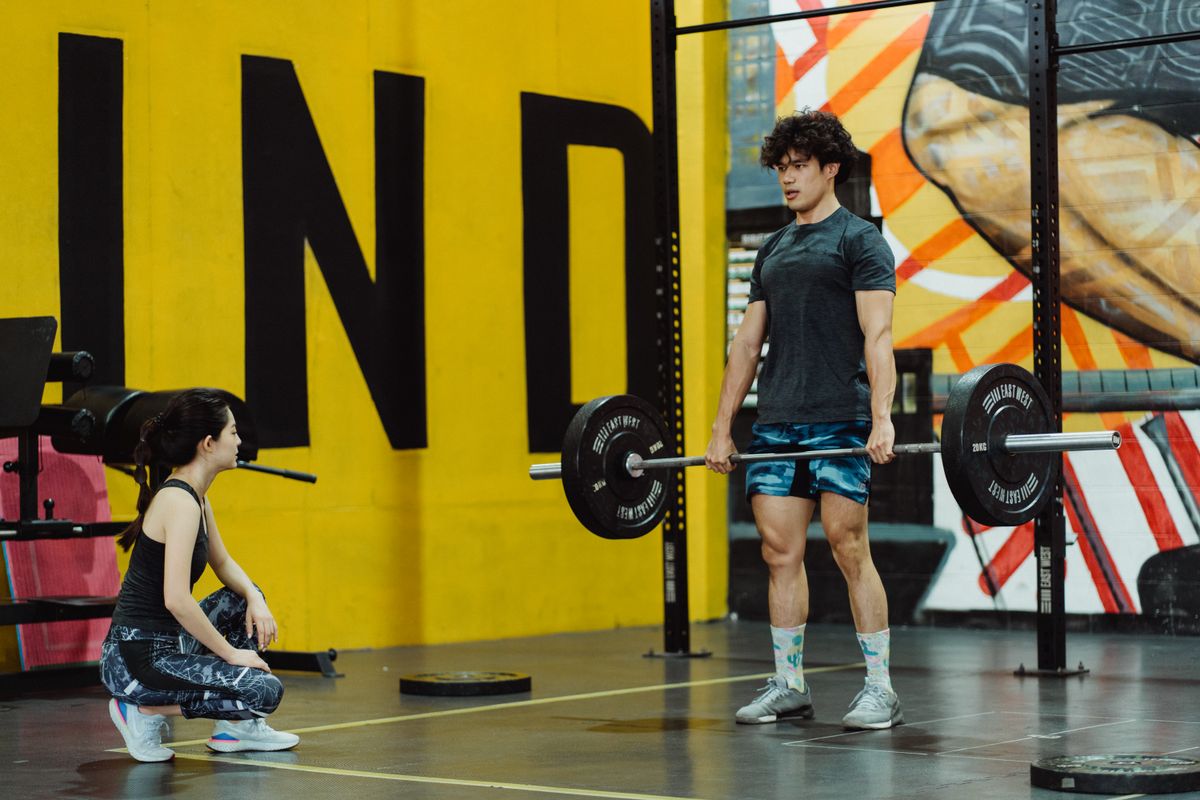
An anchor is a lift you care about and measure. Think squat, hinge (deadlift or trap bar), press, pull, loaded carry or a sprint. Pick two or three. Not seven.
- Lifter: squat, bench press, deadlift.
- Fighter: trap bar deadlift, push press, pull-up. Everything else supports your rounds.
- Runner or cyclist: split squat, Romanian deadlift, row. Strength that holds your position late in a race.
Keep the menu the same for at least six weeks. If you swap exercises every session you never find out if you are getting stronger, you only find out you are getting sore.
On anchor days, work with controlled reps and stop each set with one to three good reps left in the tank. You want quality you can repeat next week, not a max-out every time the bar is loaded.
INTERACTIVE
Weekly frame builder
How many days can you lift this week?
- Mon: Lower body (hard)
- Wed: Upper body (moderate)
- Fri: Full body (moderate to hard)
- Other days: easy cardio, mobility
Hard days are followed by easier ones. Deload every 4 to 6 weeks or when sleep and motivation drop.
Step 2: alternate hard and easy days
A strong week has contrast. After a demanding lower-body day, the next session should be lighter: technique work, upper body, easy aerobic work or mobility. Your legs recover while you still get better at something.
If you play a sport, schedule around it. Fighters should keep the heaviest lifting away from the hardest sparring day. Field athletes and runners should not stack a heavy squat session the day before a long run or a speed session. The gym serves the sport, not the other way around.
A quick way to rate your days
Give every session a number from 1 to 10 for effort. In a typical week you want no more than two or three sessions at 8 or above. Everything else lives between 4 and 7. If every day is a 9, you are not training hard, you are training tired.
Step 3: progress one dial at a time
You have three main dials: load, reps and sets. Turn one of them a little, then hold it until it feels routine. Add 5 pounds to the bar, or one clean rep, or one extra set. Then live there for a week or two.
If technique fades, the set is over. A grindy rep with a rounded back teaches your body the wrong pattern and costs you recovery you need for the next session.
Keep simple notes: the lift, the weight, the reps, how hard it felt and how you slept. After a month you will see your own pattern. Maybe you lift best two days after a rest day. Maybe late sessions wreck your sleep. That is information no generic program can give you.

Step 4: schedule recovery like a session
Meals, fluids and a regular sleep window are part of the program. Put them on the calendar the same way you put the workout there. A protein-rich meal after training and seven to nine hours of sleep do more for your next session than any trick you can find online.
Busy week? Do a shorter session with two quality movements rather than skipping everything or cramming three workouts into one marathon on Sunday. Twenty-five focused minutes keeps the habit alive. Consistency survives travel, overtime and low-energy days when the plan is flexible enough to bend.
Want the food side dialed in? Our guide to recovery nutrition after hard sessions covers protein, carbs and sleep in plain language.
Step 5: deload before you are forced to
Every four to eight weeks, take an easier week. Keep the same exercises, cut the sets roughly in half and drop the weight 10 to 20 percent. Nothing near failure. You come back fresher, not weaker.
Signs you need one sooner: your anchor lifts stall two weeks in a row, joints ache in a way that does not fade during the warm-up, your sleep gets worse or you dread sessions you used to enjoy. Listen early and a deload costs you one week. Ignore it and it can cost you a month.

MYTH OR FACT
Strength myths, checked
Tap a myth to see the facts.
MYTHEvery session should leave you wrecked.
FACTMost strength comes from repeatable, moderately hard sets. Saving the true grinders for a few planned days keeps you progressing.
MYTHYou need a brand new program every month.
FACTChanging exercises too often hides your progress. Keep anchors for at least 6 weeks and change the dials instead.
MYTHA deload means you lose your gains.
FACTA lighter week lets fatigue drop so your strength can show up. Most people come back feeling better.
Try this this week
0/5FAQ
How many days a week should I lift to get stronger?
Two to four lifting days is enough for most people. Two full-body sessions build real strength, three is a great middle ground, and four works well as an upper and lower split. Pick the number you can repeat for months.
How often should I deload?
Every 4 to 8 weeks of hard training, or sooner if your main lifts stall two weeks in a row or your joints ache. Keep the exercises, cut sets roughly in half and lighten the load by 10 to 20 percent for one week.
Should I train to failure to build strength?
Not usually. Stopping one to three reps before failure on most sets gives you nearly all of the benefit with far less fatigue, so you can train hard again sooner.
Does creatine help with strength training?
Creatine is one of the most researched sports supplements and supports strength and power output in short, intense efforts. A common daily amount is 3 to 5 g. It supports training, it does not replace it.
IF YOU WANT A HAND
Fuel that fits this plan
Food and habits come first. If a supplement makes your routine easier, these are the ones that match this article.
SOURCES
This article is for general education and is not medical advice. Talk to your doctor before starting a supplement, especially if you have a health condition, take medication, are pregnant or are under 18. Results vary from person to person.