THE SHORT ANSWER
Build your stack in two layers. The daily base is the same at every level: 1.4 to 2.2 g of protein per kg of body weight (about 0.6 to 1.0 g per lb), 3 to 5 g of creatine, and magnesium and omega-3s if your diet runs short. Session products such as caffeine, nitrate, citrulline and electrolytes come later, once you train four or more days a week or regularly go long and hot. Before adding anything, check three totals: caffeine at or under 400 mg a day, supplemental magnesium at or under 350 mg, and only one caffeinated product per day.
KEY TAKEAWAYS
- Food, sleep and a sensible program come first. Supplements fill gaps.
- The daily base barely changes from Foundation to Level 6.
- Session products earn their place with training volume, heat and sweat.
- Audit your shelf for caffeine and magnesium totals before you add a new product.
Why most stacks go wrong
Open a typical gym bag and you will often find three products doing the same job and nothing doing the basics. An energy drink on the commute, a double scoop of pre-workout at 5:30 p.m., five hours of broken sleep, no breakfast. Then the question: which supplement fixes my stalled bench?
The IOC consensus statement on supplements for high-performance athletes makes the same point in more careful language: a small number of supplements have good evidence, they work best on top of a well-planned diet, and athletes should weigh benefit against cost and risk. The ISSN review of sports nutrition says much the same. Organize your shelf in two layers, and every product gets a clear job.

Layer one: the daily base
These are taken every day, training or not, because they work by keeping something topped up. At Foundation, Level 1 and Level 2, this is all most people need.
- Protein: 1.4 to 2.2 g per kg of body weight a day (about 0.6 to 1.0 g per lb) across Foundation to Level 6, from food first. Start near the low end and move up as volume climbs. A whey isolate shake fills the gap on busy days.
- Creatine monohydrate: 3 to 5 g a day. It takes about three to four weeks to fill muscle stores without loading.
- Magnesium, if your diet is light: seeds, beans and greens first, a supplement if you fall short. Keep supplemental magnesium at or under 350 mg a day.
- Omega-3s, if you rarely eat fish: two softgels of our Omega-3 give you 360 mg of EPA and 240 mg of DHA.
Notice what is not on that list. No fat burner, no testosterone booster, no pre-workout. A three-day-a-week lifter does not need them, and the money is better spent on food.
Layer two: session products
Session products work on a short clock, usually 30 to 90 minutes. They earn their place once you hit Level 3 or Level 4, with four or five sessions a week, intervals and heavier lifting. Use them for the sessions that need them, not every day.
| Stage | Typical week | Daily base | Add for key sessions |
|---|---|---|---|
| Foundation to Level 2 | 2 to 3 sessions | Protein, creatine, magnesium if needed | Water and a normal meal 2 to 3 hours before |
| Level 3 to Level 4 | 4 to 5 sessions, lifting plus intervals | Same base, plus omega-3 if you rarely eat fish | One caffeinated pre-workout for morning sessions, or a stim-free citrulline stack for evenings; electrolytes for long, hot sessions |
| Level 5 to Level 6 | 5 to 6 days, some two-a-days | Same base; creatine with electrolytes on heavy sweat days | Beetroot 60 to 90 minutes before key endurance work; collagen with vitamin C before impact days; fast protein between sessions |
At Level 5 and Level 6 the challenge is recovery between sessions, not more stimulation. The guides on recovery between two-a-days (coming soon) and nitric oxide timing go into detail.
INTERACTIVE
Weekly frame builder
How many days can you lift this week?
- Mon: Lower body (hard)
- Wed: Upper body (moderate)
- Fri: Full body (moderate to hard)
- Other days: easy cardio, mobility
Hard days are followed by easier ones. Deload every 4 to 6 weeks or when sleep and motivation drop.

The 60-second shelf audit
Before you add anything new, put your labels side by side and run three checks.
Check 1: total caffeine
Add up coffee, tea, soda, energy drinks and pre-workout. The FDA cites 400 mg a day as an amount not generally associated with negative effects in healthy adults. One scoop of Nitric Shock is 175 mg; one serving of Energy Powder (Guava Berry), which is two scoops, is 200 mg. Pick one caffeinated product per day, and keep caffeine at least 8 hours away from bedtime if sleep is a weak spot.
Check 2: magnesium from every source
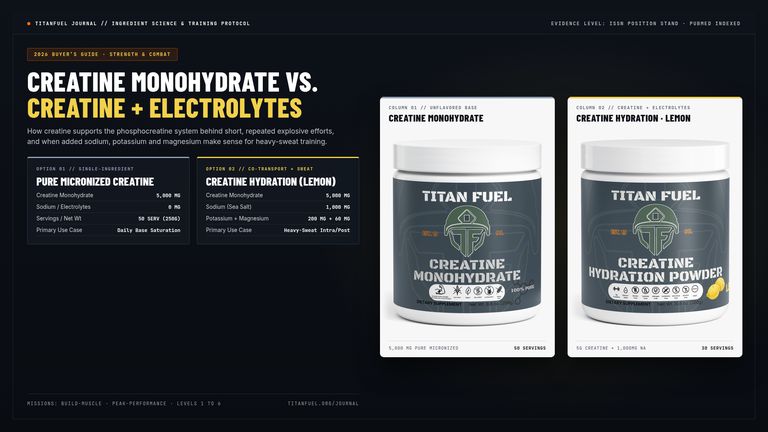
Magnesium hides in electrolyte powders and pre-workouts. Three capsules of Magnesium Glycinate are 275 mg; a scoop of Creatine Hydration Powder adds 60 mg; Nitric Shock adds 50 mg. All three on one day would put you at 385 mg, over the 350 mg supplement limit. Drop a capsule or skip one product that day.
Check 3: your situation
Our supplements are made for healthy adults 18 and older. If you take prescription medication, are pregnant or nursing, or have a medical condition, review the labels with your doctor first. If you compete in a tested sport or serve in the military, check every ingredient against your organization’s rules before you use it.
MYTH OR FACT
Stack myths, checked
Tap a myth to see the facts.
MYTHBeginners need a pre-workout to make progress.
FACTConsistent training, enough protein and sleep drive early progress. A pre-workout is optional at any level.
MYTHYou have to cycle off creatine.
FACTThere is no need to cycle creatine. Daily use at 3 to 5 g is the standard approach.
MYTHMore products means faster results.
FACTOverlapping products mostly add cost and push caffeine or minerals past sensible limits.
MYTHTwo caffeinated products are fine if they are different brands.
FACTCaffeine adds up the same way regardless of the label. Count the total.

Matching the stack to your mission
- [Build Muscle](/missions/build-muscle): daily base, with protein at the high end. Pre-workout optional.
- [Build Endurance](/missions/build-endurance): daily base plus electrolytes for long sessions, and beetroot before key workouts.
- [Cut and Lean](/missions/cut-lean): keep protein high and creatine steady. Skip the fat burner until the basics are perfect.
- [Maintain Weight](/missions/maintain-weight): daily base only for most people.
- [Peak Performance](/missions/peak-performance): the full two layers, timed around your most important sessions.
- [Lifestyle](/missions/lifestyle): protein, a consistent bedtime and magnesium from food. Keep it simple.
Your stack, in order
0/5FAQ
What supplements does a beginner actually need?
Usually just enough protein, 3 to 5 g of creatine a day, and magnesium if your diet is low in seeds, beans and greens. Session products can wait until you train four or more days a week.
Can I take Nitric Shock and Creatine Hydration Powder on the same day?
Yes. Nitric Shock has 175 mg of caffeine per scoop; Creatine Hydration Powder has none. Check your magnesium total if you also take Magnesium Glycinate that day.
How much caffeine is too much?
The FDA cites 400 mg a day as an amount not generally associated with negative effects in healthy adults. Count every source, and keep caffeine well away from bedtime.
Do I need to cycle supplements?
Creatine, protein, omega-3s and magnesium do not need cycling. Some athletes take a one to two week break from caffeine every couple of months so their usual dose feels effective again.
How should my stack change during a cut?
Keep protein high and creatine steady, keep electrolytes for hard sessions, and keep a regular bedtime. Fat burners are not a substitute for a small, steady calorie deficit.
IF YOU WANT A HAND
Fuel that fits this plan
Food and habits come first. If a supplement makes your routine easier, these are the ones that match this article.
SOURCES
- Kerksick CM et al. ISSN exercise and sports nutrition review update (2018)
- Maughan RJ et al. IOC consensus statement: dietary supplements and the high-performance athlete (2018)
- NIH Office of Dietary Supplements: Dietary Supplements for Exercise and Athletic Performance
- FDA: Spilling the Beans, how much caffeine is too much?
This article is for general education and is not medical advice. Talk to your doctor before starting a supplement, especially if you have a health condition, take medication, are pregnant or are under 18. Results vary from person to person.