THE SHORT ANSWER
For a marathon, eat about 10 to 12 g of carbohydrate per kg of body weight (4.5 to 5.5 g per lb) a day for the 36 to 48 hours before, have a familiar carb-rich breakfast 1 to 4 hours out, then take 30 to 60 g of carbs per hour during the race, up to about 90 g if your gut is trained for it. For a half, a high-carb day before, breakfast and 30 to 60 g per hour usually covers it.
KEY TAKEAWAYS
- Carb load for a marathon: 10 to 12 g per kg (4.5 to 5.5 g per lb) a day for 36 to 48 hours.
- Race morning: 1 to 4 g of carbs per kg (0.45 to 1.8 g per lb), 1 to 4 hours before.
- During: 30 to 60 g per hour, up to about 90 g with mixed carbs and a trained gut.
- Practice every part of the plan on long runs, never for the first time on race day.
Why fueling decides the last 10K
Marathon pace burns through stored glycogen quickly, and when it runs low, your pace drops no matter how fit you are. A 2019 review of nutrition for distance runners names two big race-nutrition levers: eating enough carbohydrate in the days and hours before to store glycogen for the distance, and, for longer races, taking in carbs and fluid during the race.
The half marathon is different. Most runners finish between about 1.5 and 2.5 hours, so stored glycogen gets many of them close to the finish. A smaller version of the same plan still helps, especially if you will be out there for more than 90 minutes.
Carb loading: how much, how long, and what it looks like
The joint ACSM position statement recommends 10 to 12 g of carbohydrate per kg of body weight a day (4.5 to 5.5 g per lb) for 36 to 48 hours before events longer than 90 minutes. A classic review found that higher starting glycogen postpones fatigue by about 20% in events longer than 90 minutes and improves performance over a set distance by about 2 to 3%. It found no benefit for moderate running of 60 to 90 minutes, which is why 5K and 10K runners can skip loading.
| Body weight | Carbs per day | For how long |
|---|---|---|
| 130 lb (59 kg) | About 590 to 710 g | 36 to 48 hours |
| 150 lb (68 kg) | About 680 to 815 g | 36 to 48 hours |
| 170 lb (77 kg) | About 770 to 925 g | 36 to 48 hours |
| 190 lb (86 kg) | About 860 to 1,035 g | 36 to 48 hours |
Make it easy to eat: rice, bagels, pasta, potatoes, juice and sports drinks, with less fiber and fat. Spread it across the day. Expect the scale to rise a pound or a few, because glycogen is stored with water.
Half marathoners finishing under 90 minutes need only a normal high-carb day before. Slower? One or two days of extra carbs usually works.
Race morning: breakfast, caffeine and fluids
The ACSM statement suggests 1 to 4 g of carbohydrate per kg (0.45 to 1.8 g per lb) in the 1 to 4 hours before a long event. The closer to the start, the smaller the meal. For a 150 lb (68 kg) runner eating 2 hours out, about 2 g per kg is roughly 130 g: a plain bagel with jam, a banana and 16 oz of sports drink. Eat what you ate before your long runs.
For fluids, the ACSM suggests about 5 to 7 mL per kg (0.08 to 0.11 oz per lb) at least 4 hours before, which is about 12 to 16 oz for a 150 lb runner. Then sip to thirst until the start.

Caffeine is the one race-morning supplement with strong evidence. The ISSN position stand supports 3 to 6 mg per kg (1.4 to 2.7 mg per lb), most often about 60 minutes before. For a 150 lb runner, the low end is about 205 mg. Our Energy Powder (Guava Berry) has 200 mg of natural caffeine from green tea per two-scoop serving, and one scoop gives you 100 mg if you are lighter or already had coffee. The FDA cites 400 mg a day as an amount not generally associated with negative effects in healthy adults, so count every source.
During the race: carbs per hour, gels and fluids
Jeukendrup's guidelines scale carbs with time. For about an hour, a small amount or even a mouth rinse is enough. For 1 to 2 hours, up to about 30 g per hour. For 2 to 3 hours, up to about 60 g per hour. Beyond about 2.5 hours, up to about 90 g per hour, using a mix of glucose and fructose so your gut can absorb more. The 2019 distance running review puts 75 to 90 g per hour at the top end for the longest races.
INTERACTIVE
Carbs per hour planner
Slide to your ride or run length.
That is up to about 270 g for the whole session. Roughly 4 gels or 3 bananas worth each hour (gels are often about 25 g, a medium banana about 27 g).
Targets based on Jeukendrup (2014). Above 60 g per hour, use mixed carb sources (glucose plus fructose) and train your gut first.
| Race and finish time | Carbs per hour | What that looks like |
|---|---|---|
| Half, under 1:45 | Up to about 30 g | One gel around mile 6 or 7, plus sips at aid stations |
| Half, 1:45 to 2:30 | 30 to 60 g | A gel every 30 to 40 minutes, plus sports drink |
| Marathon, under 3:30 | 60 to 90 g | A gel every 20 to 25 minutes plus sports drink, if trained |
| Marathon, 3:30 and up | 60 to 90 g | Gels or chews every 20 to 30 minutes; walk aid stations to drink |
Your gut can be trained. A 2017 review on training the gut found that stomach comfort and carb absorption improve with practice, which likely lowers the odds of stomach trouble. Gut complaints are common in distance runners, so build up to your race intake over at least three or four long runs. No gels? Chews, dates, honey packets and salted potatoes work if you practiced with them.
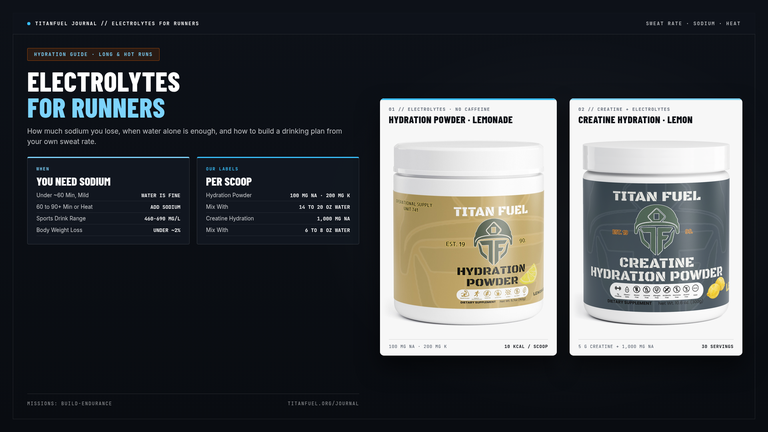
For fluids and sodium, see electrolytes for runners. Never finish heavier than you started.
After the finish: refuel, rehydrate and recover
When fast refueling matters, the ACSM statement suggests about 1.0 to 1.2 g of carbohydrate per kg per hour (0.45 to 0.55 g per lb) for the first 4 hours, along with protein. For a 150 lb runner, that is about 70 to 80 g of carbs an hour, plus about 20 g of protein, roughly 0.3 g per kg (0.14 g per lb). A real meal with carbs, protein and salt within a couple of hours is the simplest start.
Rehydrate with about 20 to 24 oz of fluid for each pound lost (1.25 to 1.5 L per kg) over the next few hours, with salty food. Then protect your sleep. A 2014 review notes that sleep loss can hurt prolonged, submaximal exercise and affect appetite and recovery, and post-race nights are often restless. Our Magnesium Glycinate gives you 275 mg of magnesium per serving; magnesium supports normal muscle function and relaxation.*

MYTH OR FACT
Marathon fueling myths, checked
Tap a myth to see the facts.
MYTHCarb loading means one huge pasta dinner.
FACTIt means 36 to 48 hours of high-carb eating, not one heavy meal.
MYTHYou do not need to eat during a half marathon.
FACTPast about an hour, small amounts of carbs help, and runners out for 2 hours or more benefit from 30 to 60 g per hour.
MYTHWeight gain during taper is fat.
FACTGlycogen is stored with water. A pound or a few on the scale before race day is a sign the load worked.
My race-week fueling plan
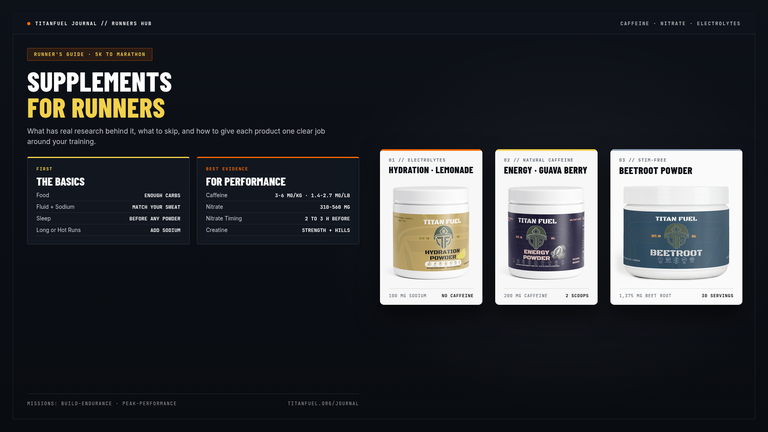
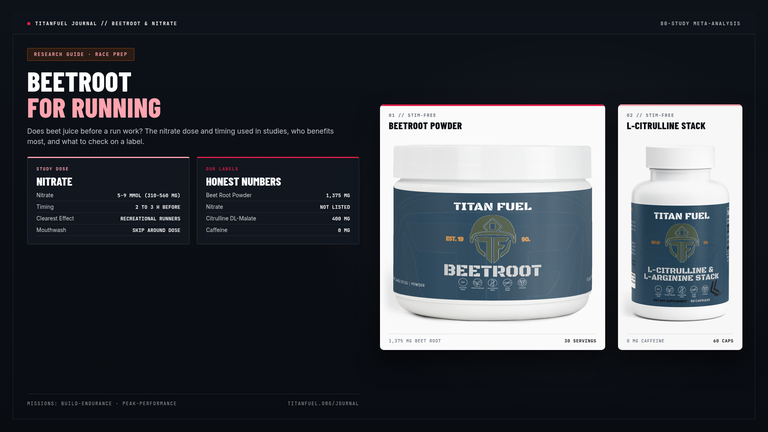
0/5For the full supplement picture, read our complete guide to supplements for runners and beetroot for running. If you are building toward race day, the Build Endurance mission keeps your training on track.
FAQ
How many carbs should I eat before a marathon?
About 10 to 12 g per kg of body weight (4.5 to 5.5 g per lb) a day for 36 to 48 hours, then 1 to 4 g per kg (0.45 to 1.8 g per lb) in the 1 to 4 hours before the start.
How many gels do I need for a marathon?
Most gels carry about 20 to 30 g of carbs. At 60 g an hour, a 4 hour marathon means about 8 to 10 gels, or fewer if you also drink a sports drink. Practice the number in training.
How should I fuel for a half marathon?
Eat a high-carb day before, a familiar breakfast 1 to 4 hours out, and take about 30 to 60 g of carbs per hour during the race if you will run longer than about an hour.
What should I eat the morning of a marathon?
A familiar, low-fiber, carb-rich meal like a bagel with jam and a banana, 2 to 4 hours before the start. Add fluids and, if you use it, caffeine about an hour before.
How do I fuel for a marathon without gels?
Use chews, sports drinks, dates, honey packets, pretzels or salted potatoes. Aim for the same carbs per hour and test everything on long runs.
IF YOU WANT A HAND
Fuel that fits this plan
Food and habits come first. If a supplement makes your routine easier, these are the ones that match this article.
SOURCES
- Thomas DT et al. ACSM joint position statement: Nutrition and athletic performance (2016)
- Hawley JA et al. Carbohydrate-loading and exercise performance: an update (1997)
- Burke LM et al. Contemporary nutrition strategies to optimize performance in distance runners and race walkers (2019)
- Jeukendrup A. A step towards personalized sports nutrition: carbohydrate intake during exercise (2014)
- Jeukendrup AE. Training the gut for athletes (2017)
- de Oliveira EP et al. Gastrointestinal complaints during exercise: prevalence, etiology, and nutritional recommendations (2014)
- Guest NS et al. ISSN position stand: caffeine and exercise performance (2021)
- FDA. Spilling the beans: how much caffeine is too much?
- Sawka MN et al. American College of Sports Medicine position stand: Exercise and fluid replacement (2007)
- Halson SL. Sleep in elite athletes and nutritional interventions to enhance sleep (2014)
This article is for general education and is not medical advice. Talk to your doctor before starting a supplement, especially if you have a health condition, take medication, are pregnant or are under 18. Results vary from person to person.